
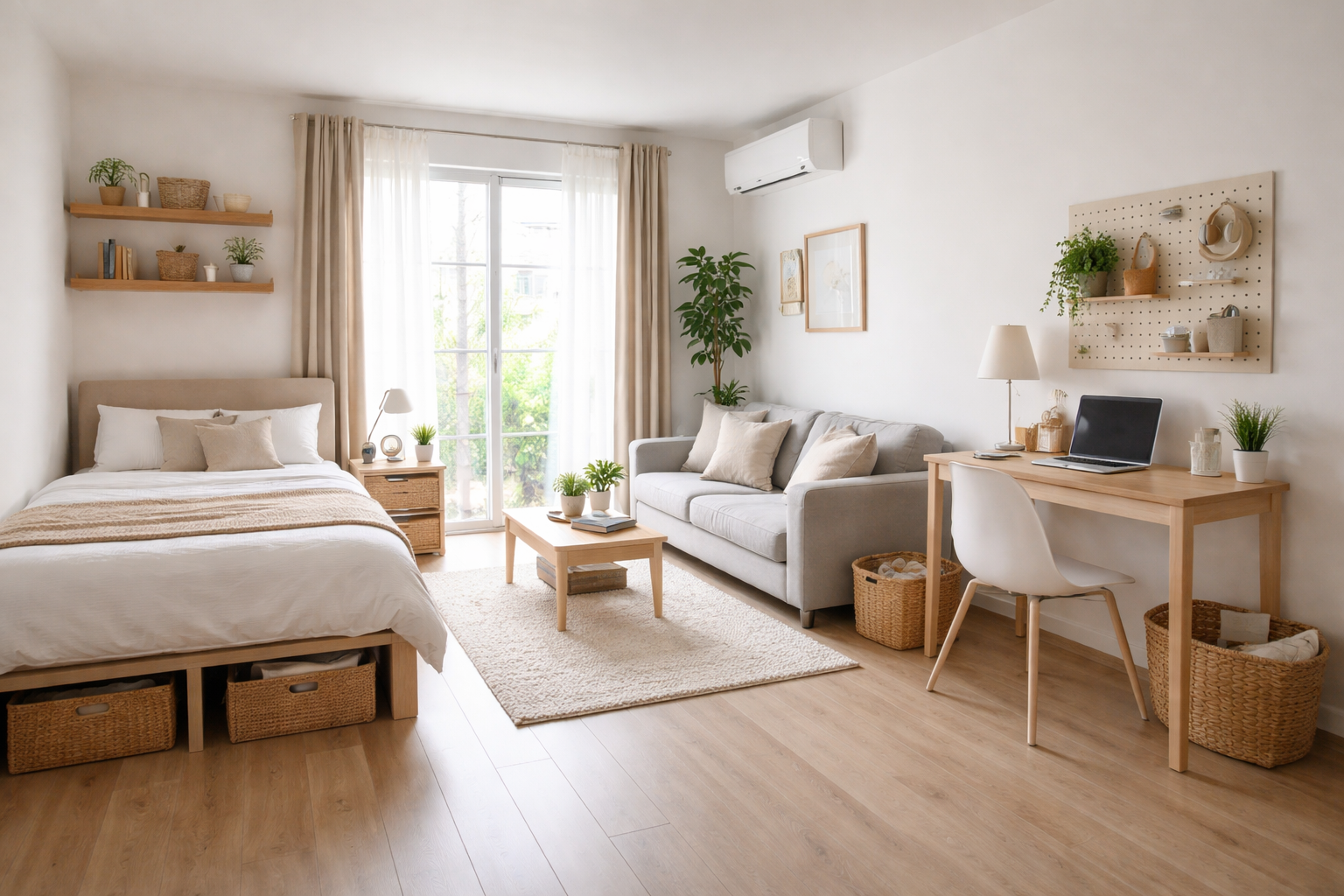
Living in a studio apartment has its advantages — lower rent, easier cleaning, and cozy living. But when your bedroom, living room, kitchen, and office all share one open space, clutter can build up fast.
The good news? You don’t need to buy expensive storage furniture or drill holes in your walls to stay organized. What you really need is a smart system.
In this guide, you’ll learn practical, renter-friendly ways to organize a studio apartment and maximize every inch — without overspending or overcomplicating your space.
Start With Zones (Even If It’s One Room)
The biggest mistake people make in a studio apartment is treating it like one giant room.
Instead, think in zones.
Even in a small space, you should mentally divide your apartment into:
- Sleeping zone
- Living/relaxing zone
- Work or dining zone
- Entry drop zone
You don’t need walls to create separation.
You can define zones using:
- Area rugs
- Floor lamps
- Bookshelves
- A sofa placed strategically
- A curtain divider
- A folding screen
When each area has a clear purpose, your apartment instantly feels more organized and intentional.
If you’ve already read our guide on small apartment organization tips, you know that defining function is the foundation of staying organized.
Use Vertical Space Strategically
When floor space is limited, go up.
Vertical storage is one of the most powerful tools in a studio apartment.
Here are renter-friendly options:
- Over-the-door organizers
- Adhesive wall hooks
- Tall bookcases
- Floating shelves (if allowed)
- Pegboards
- Stackable storage units
Think about walls as usable storage real estate.
For example:
- Hang bags behind the door
- Use wall hooks for jackets
- Install a narrow shelf above your desk
- Store bins on top of cabinets
The key is to keep it balanced. Too much open shelving can create visual clutter. Mix open and closed storage for a clean look.
Choose Multi-Functional Furniture
In a studio, every piece of furniture should work twice.
Multi-functional furniture reduces clutter and eliminates the need for extra storage pieces.
Smart choices include:
- Bed with built-in drawers
- Storage ottoman
- Lift-top coffee table
- Fold-down dining table
- Nesting tables
- Sofa bed
For example, a storage ottoman can hold blankets, act as seating, and serve as a coffee table.
When shopping, ask yourself:
Does this item solve more than one problem?
If the answer is no, reconsider it.
Organize by Frequency of Use
Not everything should be equally accessible.
A powerful organizing method is sorting items by how often you use them.
Daily items
Keep within arm’s reach. These should be visible or easy to grab.
Weekly items
Store in drawers or baskets nearby.
Rarely used items
Place on high shelves, under the bed, or in closed containers.
This prevents overcrowding your primary living areas.
When everything you use daily has a “home,” your space feels instantly calmer.
Hide Visual Clutter
In a studio apartment, visual clutter feels amplified because everything is visible at once.
Here’s how to reduce it:
- Use matching baskets
- Choose neutral storage containers
- Store small items inside drawers
- Hide cords with cable organizers
- Keep countertops mostly clear
Closed storage always looks cleaner than open storage.
For example:
Instead of stacking mail on the counter, use a small drawer organizer.
Instead of leaving chargers everywhere, use a cable box or clip system.
The goal isn’t to own less — it’s to store smarter.
Keep Surfaces Minimal
In a small space, flat surfaces attract clutter quickly.
Try this rule:
Limit visible surfaces to 3–5 decorative items maximum.
That includes:
- Coffee table
- Kitchen counter
- Desk
- Nightstand
Too many objects make the space feel chaotic, even if it’s technically clean.
Keep decor intentional:
- One plant
- One candle
- One book stack
- One framed photo
Less visual noise = bigger-feeling space.
Use Under-Bed and Hidden Areas Wisely
In a studio apartment, hidden storage matters.
Great places to store items:
- Under the bed
- Behind doors
- Inside ottomans
- Above cabinets
- Under the sofa
Use flat containers for under-bed storage.
Store seasonal clothing or extra bedding there.
Just avoid turning these spaces into “junk zones.”
Only store categorized, labeled items.
Create a Simple Reset Routine
Organization isn’t a one-time event.
In a studio apartment, maintenance is everything.
Try this system:
5-Minute Nightly Reset
- Clear surfaces
- Return items to their zone
- Wash dishes
- Fold blankets
Weekly 15-Minute Declutter
- Toss junk mail
- Reorganize drawers
- Remove items you didn’t use
Keep a Donation Box
If something hasn’t been used in 60–90 days, consider donating it.
Consistency keeps your studio manageable.
Frequently Asked Questions
How do you organize a studio apartment without storage space?
Start by creating zones and using vertical storage. Choose multi-functional furniture and keep surfaces minimal. Even without built-in storage, systems and categorization make a major difference.
How do you separate spaces in a studio apartment?
Use rugs, lighting, shelving units, or curtains to visually divide sleeping and living areas. Furniture placement is often enough to create separation without adding walls.
How do I reduce clutter in a small studio?
Sort items by frequency of use, remove unused belongings regularly, and keep visible surfaces limited to essentials. A nightly reset routine prevents clutter from building up.
Final Thoughts
Organizing a studio apartment isn’t about buying more containers — it’s about creating structure in a shared space.
When you define zones, use vertical storage, choose multi-functional furniture, and build a simple reset routine, your apartment will feel larger, calmer, and easier to maintain.
Small spaces don’t require big budgets.
They require smart systems.